Social Dynamics in Vertical Spaces
The layout of a mountainside village is rarely egalitarian. The physical gradient imposes strict constraints on movement, access to resources, and exposure to elements. Consequently, the elevation at which a family resides often becomes a direct reflection of—or a contributing factor to—their social standing within the community.
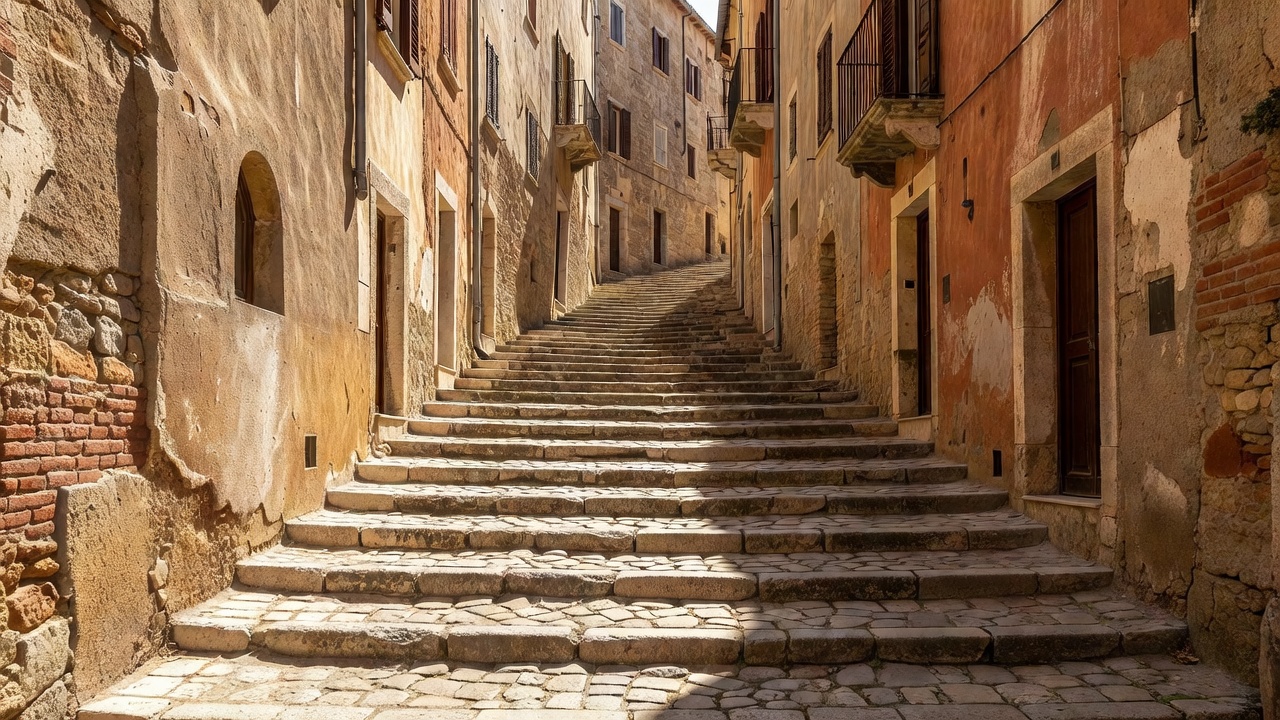
The Stratification of Elevation
In many historical European vertical settlements, such as those perched along the Mediterranean coast, higher elevation correlated with higher status. The upper reaches of the village offered cleaner air, away from the refuse that naturally accumulated at the bottom of the slope. Furthermore, the highest point was the most defensible against naval or terrestrial raids. The local church, defensive keep, and affluent residences were clustered near the peak.
Conversely, in certain Andean and Himalayan settlements, lower elevations are sometimes prized because they are closer to water sources, trade routes, and fertile valley floors. The physical effort required to carry heavy goods up hundreds of stone steps meant that those who lived at the top faced significant daily labor or expense, reversing the European model of high-elevation prestige.
Communal Infrastructure and Interdependence
Isolation forces cooperation. The infrastructure of a vertical village—retaining walls, shared cisterns, communal ovens, and the stairways themselves—cannot be maintained by a single household. A failure in a retaining wall halfway up the slope threatens both the structures above it (which lose their foundation) and those below it (which face landslide risk).
This physical interdependence historically fostered strong communal governance. Decisions regarding water rationing from shared springs, the repair of pathways, and the clearing of avalanche debris required coordinated civic action, leading to tight-knit, often insular societies.
| Zone | Common Function | Accessibility |
|---|---|---|
| Apex / Ridge | Defensive keeps, religious centers, lookouts | Highly restricted; arduous climb |
| Mid-Slope | Dense residential clusters, communal plazas | Moderate; connected by lateral paths |
| Base / Valley | Trade posts, heavy agriculture, mills | High; accessible by pack animals |
Navigating the Vertical Web
The absence of flat streets fundamentally alters daily movement. Wheeled transport is useless in a village comprised entirely of stairs and ramps. Movement is highly localized; residents develop precise routes through narrow alleys, often passing over the rooftops of lower buildings. This creates a dense, three-dimensional public sphere where privacy is minimal and acoustic transmission is high, further shaping the communal identity of the settlement.